
Digitised lubrication: from a hidden manual task to a measurable part of asset performance management
Manual lubrication remains one of the most common maintenance tasks in the industry. However, many companies still rely on operators’ memory, handwritten logbooks, or work routines that cannot be verified. The result? Missed lubrication points, excessive grease use, premature failures, and endless debates about who did what exactly.
According to Peter Van Geertruyen, Business Expert in Transmissions & Motion Control, it is high time to stop considering lubrication as a blind routine. “Without insight into your lubrication practices, you’re essentially operating on guesswork,” he states. “You don’t know if the grease is reaching the right spot, if the dosage is correct, or if the proper intervals are being met. Lubrication becomes a gamble, not a manageable process within a modern maintenance strategy.”
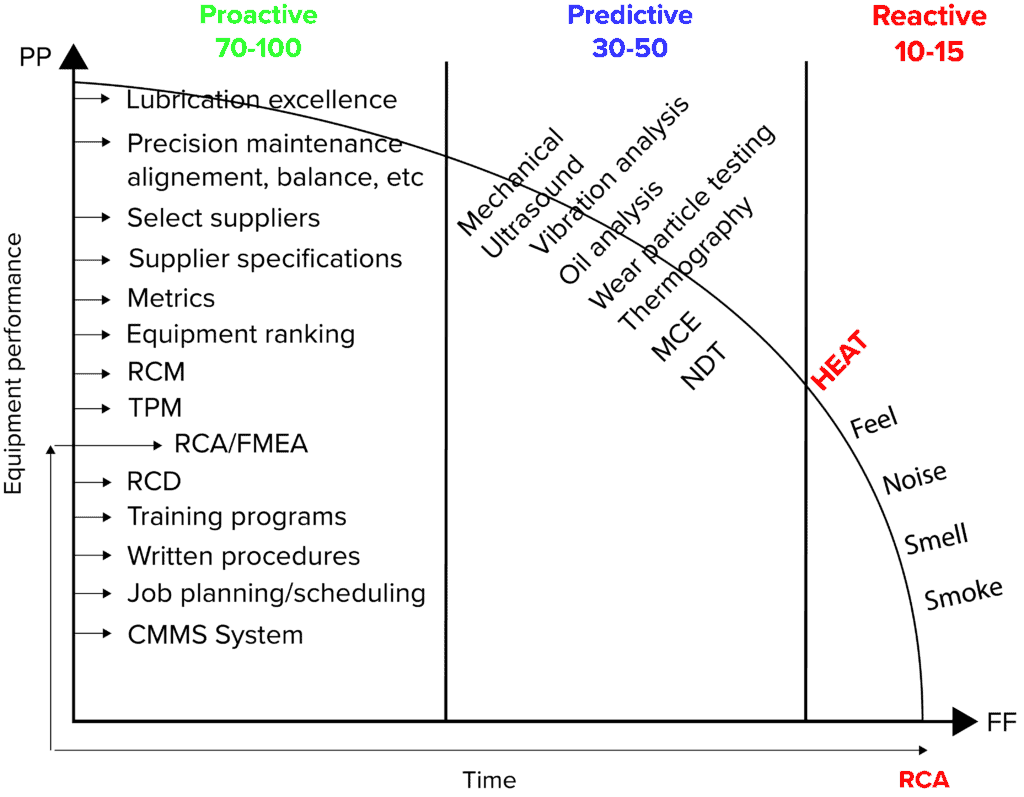
Lubrication as a determining factor in the P-F curve
Looking at the P-F curve highlights why lubrication deserves more attention. When done correctly, this task is positioned on the far left of the timeline, in the preventive phase, where it has the greatest impact on the performance and lifespan of assets. According to Van Geertruyen, this is exactly where the most gains or damage occur. “Lubrication doesn’t belong on a checklist,” he emphasizes. “It’s a fundamental part of asset reliability. If you lack control over this, you waste asset lifespan.”
Control starts with insight, and that is exactly what is often missing, according to Van Geertruyen. “In a maintenance strategy like Reliability 5.0, where data and evidence are essential, you need to be able to prove what’s been done. Otherwise, you’ll be operating on assumptions, and those risks are no longer acceptable today.”
Digital solutions in lubrication workflows
Yet, lubrication remains an irregularly performed maintenance task in many industrial environments. Van Geertruyen often sees it going wrong: “There is rarely a system that objectively confirms whether all points have been treated, if the correct grease was used, and if routes were followed accurately. This makes lubrication unmanageable. And what you can’t control, you can’t improve.”
He points to digitisation as a key leverage point. “With a solution like GreaseBoss, you replace paper records with a digital approach, capturing execution data in real time and on-site. Each lubrication point gets a unique RFID tag and provides guided instructions to the technician. Once they connect the grease pump to the lubrication point, the correct instructions automatically appear: the type of grease, exact dosage, compliance information, and relevant safety guidelines. This ensures that the execution always follows the plan.”
From guesswork to a controllable process
This approach not only provides an overview but, more importantly, clarity and control. “You can see in real time how much lubricant has been dispensed, whether work plans were followed, and the consumption per individual lubrication point,” explains Van Geertruyen. “At that moment, you not only have data but also conclusive proof. You gain demonstrable control over a process that was previously largely invisible. And that difference is essential.”
From ‘gut feeling’ to strategically managed
Once lubrication data is reproducible and verifiable, it can actively contribute to performance management. Work orders become conclusive, deviations detectable, and maintenance decisions testable based on execution evidence. “The reliability of installations becomes less dependent on individual craftsmanship,” says Van Geertruyen, “and more on standardized processes. Lubrication shifts from ‘done based on trust’ to ‘proven correctly executed’.”
This shift enables the direct linking of insights regarding consumption, frequency, and failure modes to KPIs such as MTBF and OEE. “When you can prove that lubrication is being done correctly, it becomes a strategic lever,” he concludes. “Not only to avoid downtime but to elevate the entire maintenance process to a higher level of reliability.”